
Home
Investment Advisory
Make Better Investment Decisions
with Clear Financial Insight
Investment advisory helps you assess whether an opportunity is financially viable, valued, and aligned with your goals. It looks beyond projected returns to review cash flow, funding needs, risk, market conditions, and long-term potential. At PFOC, we support businesses, individuals, overseas Pakistanis, and foreign investors assessing business, property, project, and expansion opportunities in Pakistan and overseas. The goal is to give you a clearer financial view before a major investment decision is made.
Investment Feasibility Analysis
Business & Asset Valuation Support
Risk and Return Assessment
Advisory for Businesses & Individuals
Pakistan Market & Financial Insight
What Investment Advisory Services Mean for Investors in Pakistan
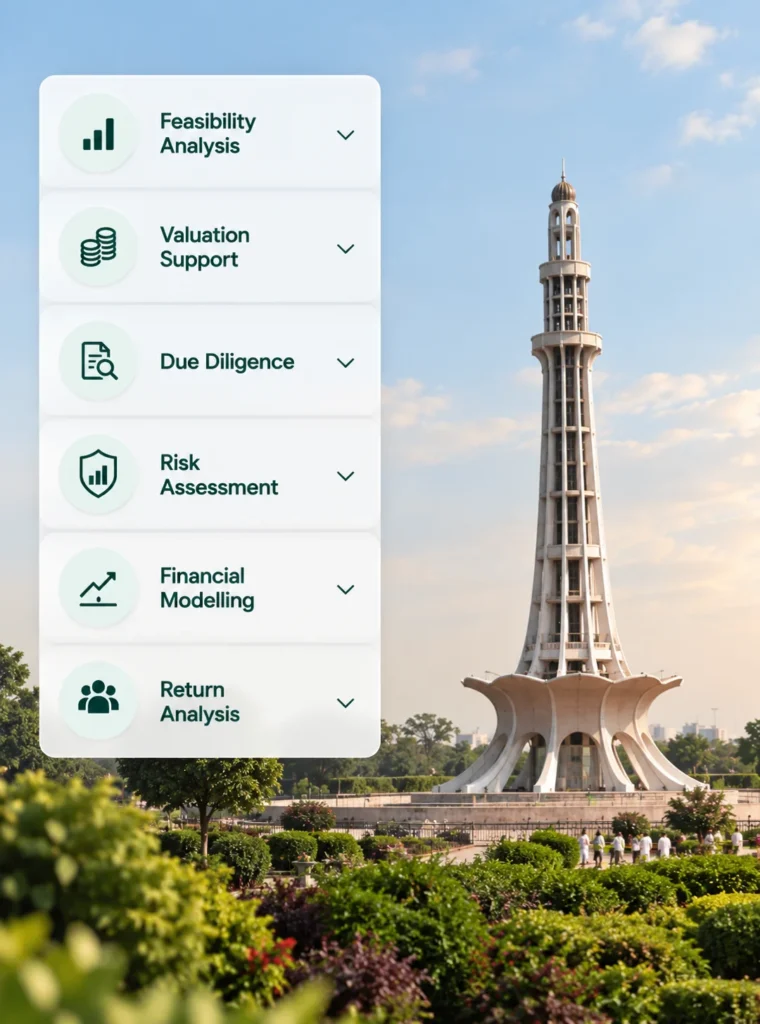
A promising investment can still become a poor decision if the numbers and risks are not tested properly. Investment advisory helps you assess what an opportunity is worth, what could affect the return, and whether it fits your goals. In Pakistan, this is especially important for business acquisitions, property, expansion plans, joint ventures, and new projects. Local market conditions, tax, financing, ownership structure, and cash flow can all change the outcome. Overseas Pakistanis and foreign investors may also face currency and information risks. PFOC brings feasibility, valuation, due diligence, financial modelling, risk assessment, and return analysis together so you can make a more informed decision before committing capital.
Some of the costliest investing mistakes involve numbers that have not been questioned at all. A business may show strong profit but depend heavily on one customer. A property may promise an attractive rental yield while leaving out vacancy, maintenance, tax, and financing costs. A growing startup may have high-growth potential but may not have sufficient capital to survive the first few years. That is why valuation, cash flow, market demand, liabilities, tax exposure, downside risk, and exit options need to be tested before the deal moves forward.
The Problems Usually Start Before the Money Goes In
Most bad investment outcomes are not caused by one dramatic mistake. They usually begin with small warning signs. These are some of the common mistakes we have seen while guiding businesses through investment decisions.
Forecasts Built on Best-Case Assumptions
Revenue may look strong, but the forecast may rely on fast growth, stable costs, or demand that has not been tested. If those assumptions shift, expected returns can fall quickly.
Paying More Than the Asset Is Worth
A business or property may be priced around future potential instead of current performance. That means you could be paying today for growth that may never fully materialize.
Profit Without Healthy Cash Flow
A company can report profit and still struggle with cash. Receivables, inventory, debt payments, or working capital needs can put pressure on the business after you invest.
Liabilities You Discover Too Late
Tax dues, debt, guarantees, old contracts, or pending claims may not appear in the first review. Once uncovered, they can reduce the real value of the deal.
Returns That Shrink After Real Costs
A property or business may promise strong returns, but financing, taxes, maintenance, vacancy, and future capital needs can reduce what you earn from the investment.
Decisions Based on Unverified Information
Overseas and foreign investors may rely on a seller, broker, partner, or relative for information. Without an independent review, important financial gaps can easily be missed.
Too Much Capital in One Opportunity
Putting too much money into one property, business, or project can reduce flexibility. If the investment underperforms, the impact on your wider finances can be much greater.
Entering Without a Clear Exit Plan
Many investors focus on how to enter a deal, not how to leave it. Without a clear exit route, your capital may stay tied up longer than expected.
If any of these situations sound familiar, the problem is usually not the lack of an opportunity. It is the lack of independent analysis before the commitment is made.
Investment Advisory Services Built Around Real Decisions
Investment advisory goes beyond stocks and portfolios. Our services below help you assess business, property, project, and expansion opportunities by reviewing their viability, value, expected returns, and risk before you commit capital.

Investment Opportunity Assessment
Used for new businesses, startups, partnerships, or expansion plans. The review looks at market demand, capital needs, expected return, competition, and major risks before more money is committed.

Investment Feasibility Analysis
Useful before funding a new branch, facility, property project, or commercial venture. Revenue, costs, break-even point, working capital, and demand are tested to see whether the plan can work.

Investment Due Diligence
Important when buying a business, entering a partnership, acquiring shares, or joining a venture. Financial records, debt, liabilities, contracts, and revenue quality are checked before the deal moves forward.

Business & Investment Valuation
Used when you need to know whether the asking price for a business, asset, or ownership stake is reasonable. Earnings, cash flow, assets, and growth potential are reviewed to estimate value.

Financial Modelling & Forecasting
Useful when an investment depends on future growth, sales, costs, or funding. Different scenarios are built to show how the opportunity may perform under strong, normal, or weaker conditions.

Investment Risk Management
Used when market demand, debt, currency movement, regulation, or operations could affect the result. The review identifies where the investment is most exposed before those risks become costly.

ROI, IRR & Payback Analysis
Helpful when comparing opportunities or checking whether the expected return justifies the capital involved. It measures return, timing, cash generation, and how long recovery of the original investment may take.
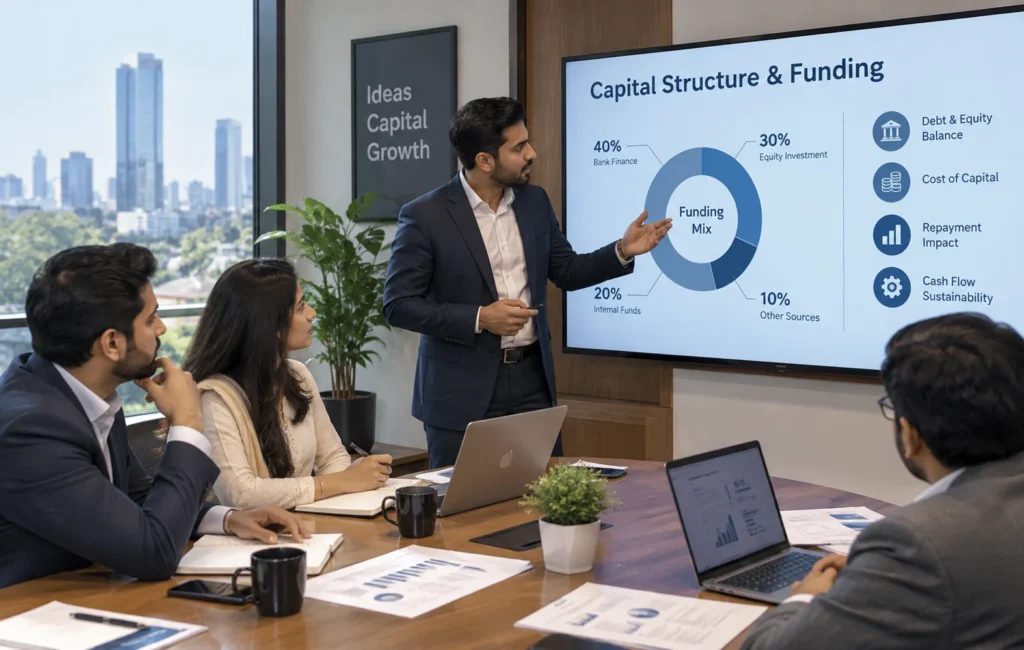
Capital Structure & Funding Review
Relevant when an investment will use bank finance, internal funds, investor capital, or a mix of debt and equity. Funding cost, repayment pressure, and cash-flow impact are reviewed.

Post-Investment Performance Review
Relevant after capital has already been invested in a business, property, project, or expansion. Actual revenue, costs, cash flow, and returns are compared with the original plan.
Understanding Different Investment Decisions in Pakistan
A business purchase, property deal, portfolio decision, or cross-border investment should not be judged the same way. Each carries different return drivers, costs, risks, and due-diligence needs. The right analysis depends on where the capital is going and how that investment is expected to perform.
Business Investment in Pakistan
Buying into a business means taking on more than its current profit. You are also taking on its cash flow, debt, customers, working capital needs, contracts, and future growth assumptions. Whether you are buying an existing company, taking a private stake, funding a startup, entering a partnership, or considering an acquisition, the numbers should support both the price being asked and the return being promised.
Key Business Investment Metrics
EBITDA
✓ Historical financial statements
✓ Main revenue sources
✓ Existing loans and liabilities
✓ Major customer and supplier contracts
✓ Customer concentration
✓ Working capital position
✓ Tax and compliance status
A strong business should not only show profit. The records should also support the story being presented to the investor.
Property & Real Estate Investment in Pakistan
Property returns depend on more than the purchase price or expected appreciation. Rental income, vacancy, financing, tax, maintenance, location demand, and resale potential all affect what the investment may actually return. Our property investment advisory helps investors review these factors before buying residential, commercial, rental, or development property.
Key Property Investment Measures
The real return on the property will be different once maintenance, vacancy, tax, finance, and management costs are considered in addition to the rent and purchase price of the property.
A real estate investment consultant should assess the return after costs, not just the headline yield.
✓ Vacancy and maintenance costs
✓ Financing and tax impact
✓ Resale and exit potential
Looking at these figures before buying gives a much clearer view of what the property may return.
Portfolio & Wealth Investment in Pakistan
A strong portfolio is not just about earning a good return. It should also match how much risk you can take, how quickly you may need access to your money, and how long you plan to stay invested. An investment portfolio review checks whether too much capital is tied to one asset, sector, property, or business. It also helps show whether your current investments still fit your goals or need to be rebalanced as your priorities change.
Key Portfolio Review Measures
The difference between filer and non-filer status can significantly affect the amount deducted.
✓ Too much exposure to one asset
✓ Goals or priorities have changed
✓ Liquidity has become weaker
✓ Risk is higher than intended
✓ Returns are below expectations
✓ Personal or business circumstances have changed
A timely investment portfolio review helps bring the portfolio back in line with your strategy and long-term plans.
Cross-Border & Overseas Investment in Pakistan
Cross-border investors face risks that local investors may not. Exchange-rate movement, tax treatment, ownership structure, repatriation rules, local regulation, and execution on the ground can all change the final return. These issues are especially relevant for overseas Pakistanis, foreign investors, joint ventures, business acquisitions, and international capital entering projects in Pakistan.
Cross-Border Factors to Review
✓ Who controls the local entity?
✓ How will profits be distributed?
✓ Can funds be repatriated easily?
✓ What taxes apply locally and abroad?
✓ What currency risk could affect returns?
✓ Who is verifying the local financial information?
A cross-border investment is only as strong as the structure behind it.
Project & Expansion Investment
New projects often have little historical performance to rely on. A new branch, factory line, retail outlet, technology upgrade, or major equipment purchase therefore depends heavily on forecasts for demand, costs, timing, and cash flow. Those assumptions should be tested before spending begins, not after the project is already committed.
Project Investment Metrics
✓ Expected sales volume
✓ Pricing assumptions
✓ Operating costs
✓ Project delays
✓ Financing costs
✓ Exchange-rate movement
✓ Demand growth
Small changes in these assumptions can materially change whether a project remains financially viable.
How PFOC Guides Your Investment Decision from Start to Finish
From the first financial review to the final recommendation, our team at PFOC reviews the numbers, risks, and assumptions behind your investment, giving you the clarity to make a well-informed decision.
Define the Investment
We start with the opportunity, capital required, expected return, time horizon, and your main objectives. This gives the review a clear scope and sets the questions that need to be answered.
Review the Financial Records
Financial statements, forecasts, cash flow, liabilities, debt, and supporting documents are checked to see whether the investment is backed by reliable financial information.
Check Market & Feasibility
Demand, competition, pricing, costs, break-even needs, and growth assumptions are reviewed to see whether the opportunity can work under realistic market conditions.
Test Valuation & Returns
We review valuation, ROI, IRR, payback period, and expected cash generation to see whether the price and potential return make financial sense together.
Assess the Key Risks
Financial, market, operational, currency, tax, and concentration risks are identified. The review shows where the investment is most exposed if conditions change.
Stress-Test the Assumptions
Sales, costs, demand, financing, and timing are tested under base and downside scenarios. This shows how the investment may perform when things do not go exactly as planned.
Check Pakistan Regulatory Requirements
For Pakistan-based investments, tax, ownership, documentation, and regulatory requirements are reviewed. Where relevant, SECP rules and licensing requirements are also considered before the deal moves ahead.
Compare the Available Options
Where more than one route exists, we compare different properties, funding structures, deal terms, or projects based on return, risk, liquidity, and capital required.
Present Findings & Next Steps
The review brings together the main findings, risks, gaps, and areas that need further action. You leave with a clearer view of whether to proceed, negotiate, restructure, or investigate further.
Frequently Asked Questions About Investment Advisory
Find clear answers to the questions investors often ask before seeking professional advice, from who the service is for to when an independent review may be useful for investments in Pakistan or from overseas.
- 0305 520 9095
- Phone: 0305 520 9095
- Office: 202/1BAbdalian Cooperative Housing Society, Block B, Johar Town, Lahore
Who are PFOC’s investment advisory services for?
These services are suitable for business owners, individual investors, property investors, overseas Pakistanis, and foreign investors making significant investment decisions connected to Pakistan. They can also help companies assess expansion, acquisitions, partnerships, or new projects.
When should I speak to an investment advisor?
Ideally, before you sign an agreement or commit major capital, an investment advisor can be useful when the numbers are unclear, the investment is large, several options are being compared, or you need an independent view of the risks and expected return.
What information should I provide for an investment review?
The documents depend on the opportunity. They may include financial statements, revenue forecasts, cash-flow records, valuation reports, property details, contracts, financing terms, tax information, and other documents that support the investment case.
Can overseas Pakistanis get investment advice for opportunities in Pakistan?
Yes. Overseas investors often need extra review because currency movement, local regulations, tax treatment, ownership structure, and information provided by people on the ground can affect the final return.
Does an investment advisor make the final investment decision for me?
No. Investment advisory should help you understand the numbers, risks, and possible outcomes. The final decision remains yours. The aim is to give you enough reliable information to decide with greater clarity.
What is the difference between an investment advisor and an investment consultant?
The terms can overlap, but the scope is often different. An investment consultant may focus on financial analysis, feasibility, valuation, or business strategy, while securities-related investment advice in Pakistan may be subject to specific SECP rules and licensing requirements.
How much do investment advisory services cost?
The fee depends on the scope and complexity of the review. A focused investment assessment will usually require less work than a business valuation, full due diligence exercise, feasibility study, or cross-border investment review. PFOC confirms the scope and fee before the engagement begins.
Do you provide investment advisory in Lahore and across Pakistan?
PFOC supports clients in Lahore and across Pakistan, including businesses, individual investors, overseas Pakistanis, and foreign investors assessing opportunities connected to Pakistan. Remote consultations can also be arranged where appropriate.
Do I need investment advisory if the opportunity was recommended by someone I trust?
A recommendation can help you find an opportunity, but it does not replace independent analysis. The financial records, valuation, risks, expected return, liabilities, and exit options should still be reviewed before significant capital is committed.
Tell Us Your Tax Situation — We'll Reply With Exact Next Steps
EXCELLENT Based on 9 reviews
 Posted on Google
 Azan NawazExcellent. Reliable. 100% to be recommended. I would definitely use their services again. Great experience from initial inquiry to the completion of the job, Professional and efficient team.Posted on Google
 Shoaib Ahmed DarAmazing customer services their finance advise and digital marketing services are best it is one stop shop for businesses in growing phasePosted on Google
 Bilal FarooqBusiness development and creativePosted on Google
 Usama SheikhWith PFOC's diverse set of services under one roof in Pakistan, businesses and individuals are able to grow faster and more effectively. It is very impressive that legal services, accounting services, and marketing services can be combined using a digital platform to reach both business-to-business and business-to-consumer customers. I found the team to be very experienced, energetic, supportive, and easy to work with.Highly Recommended in PakistanPosted on Google
 Azhar Ali ButtarGreat people to work with! They develop networks around the businesses so you can actually meet your next big customer or a brilliant supplier through them. This is unlike any of the businesses I have met in Pakistan.Posted on Google
 Syed Qasim AbbasPFOC has a bunch of brilliant people who can really help your business grow via the digital medium. Whether it is SEO or Web Development or the brand development itself, they really help you through and through. Recommended!Posted on Google
 Saeed RoomiI have been working with PFOC for over a year and it feels great everyday. You get to meet people from different backgrounds and there is a lot of cross learning here. I feel this is perhaps one of the best employer I have come across in Pakistan.Posted on Google
 Rana HaroonOne of the best branding experts I have met in Pakistan. They delivered what they promised and to be honest surpassed my expectations. Would definitely recommend their services to any business who wants to establish their brand as a market leader.
Discuss Your Investment Before You Commit Capital
A short consultation can help you understand whether an opportunity deserves a closer look. Share what you are considering, the amount of capital involved, and any concerns around return, valuation, cash flow, property, or business risk. PFOC can help you identify what needs to be reviewed before you move forward, so you are not making a major investment decision with missing information.
- 0305 520 9095
- Phone: 0305 520 9095
- Office: 202/1BAbdalian Cooperative Housing Society, Block B, Johar Town, Lahore
Free Tax Consultation Request
We respond within 24 hours usually much faster.