
Financial Planning Services in Pakistan: A Complete Guide for Personal and Business Success (2026)
Request a Free Quote
The economy of Pakistan is truly suffering. Inflation reached 11.7% in May 2026. Transport fares have risen 37% compared to a year ago. The cost of living, including heating and electricity, has increased 16.8%. These are not mere statistics. You recognize them when you see your monthly bank statement.
Most people respond by working harder. But working harder without a plan gives you more of the same. Earning more money does not build wealth on its own. It only does that when you tell your money where to go. That’s what financial planning services do.
This guide covers financial planning services in Pakistan for both people and businesses. By the end, you’ll know what a good plan looks like, where most people go wrong, and how expert help can change your results.
What Are Financial Planning Services?
Financial planning services give you a step-by-step strategy to reach your money goals. They look at your income, spending, debt, savings, investments, and risk in one connected plan.
Think of it as a road map. Without one, every money decision is a guess. With one, each choice moves you closer to a specific goal.
Key Components of a Financial Plan
A complete plan has several parts that work together:
- Income and expense review
- Emergency fund target
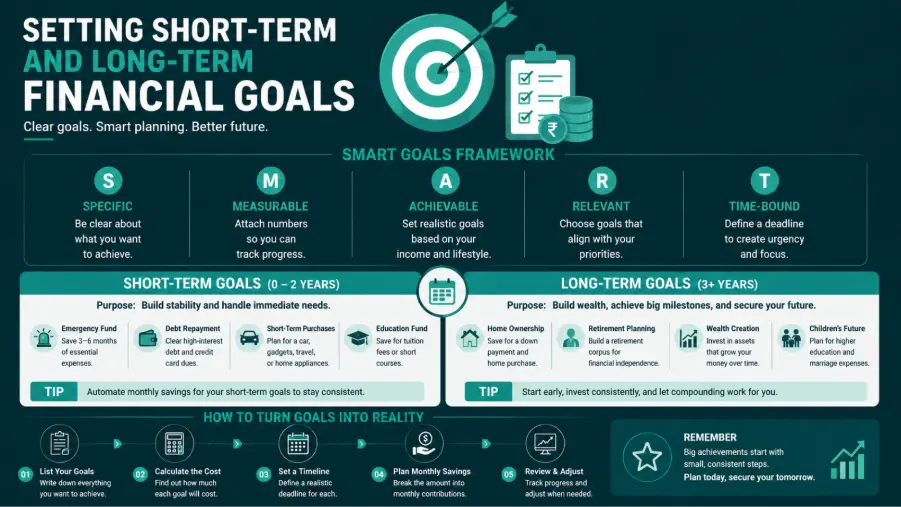
- Financial goal planning across short, medium, and long timeframes
- Cash flow planning Pakistan for monthly stability
- Investment and wealth strategy
- Risk and protection planning
- Long term financial planning for retirement and legacy
How Financial Planning Differs from Accounting and Investment Management
An accountant records what has already happened. An investment manager picks where to put money. A financial advisor in Pakistan does something broader. They look at the full picture, set goals, and tie your tax, investments, spending, and protection into one plan.
Who Needs Financial Planning Services in Pakistan?
Anyone who earns money can benefit from planning. That includes salaried workers who want to save more, families preparing for high costs, business owners managing cash, SMEs trying to grow, and anyone who hasn’t started saving for retirement yet.
Why Financial Planning Is Essential in Pakistan in 2026
The Impact of Inflation on Personal and Business Finances
Pakistan’s CPI inflation reached 11.7% in May 2026. That’s up from 7.3% in March. Housing bills rose 16.8%. Transport costs jumped 36.8%. Food prices went up 7.9%. These numbers directly cut what your salary can buy each month.
For businesses, energy costs have risen sharply due to the Middle East conflict. If your prices and margins were set before these increases, your real profit may be far less than your books suggest.
Why Saving Money Alone Is No Longer Enough
With inflation above 11%, a savings account giving you 3% to 5% is losing real value. Every year your money sits in a low-return account, it buys less. Inflation-proof financial planning means finding returns that beat inflation, not just protect the number on paper.
Common Financial Challenges Faced by Pakistanis
The most common problems we see are living paycheck to paycheck despite a decent income, no emergency fund, growing debt, confusion about where to invest, and no plan for retirement. For businesses, it’s usually the same core issue: profitable on paper, but short on actual cash.
The Cost of Delaying Financial Planning
Every year without a plan costs you. You miss out on compound returns. You leave wealth unprotected. You push your goals further away. Starting at 35 instead of 25 doesn’t just mean 10 fewer years of saving. It means the base on which your returns grow is 10 years smaller. The gap is much wider than most people expect.
Signs You Need a Financial Plan
Most people wait for a crisis before they start planning. That’s the wrong time. Here are signs you need a plan now:
- Your income covers bills but never builds savings
- You have no clear figure for what retirement will cost
- You carry debt with no set repayment plan
- Your business earns well but keeps running short on cash
- You don’t know which investments suit your situation
- You have no emergency fund to cover 3 to 6 months of costs
Any one of these is reason enough to act. All six together means your finances are working against you.
Personal Financial Planning in Pakistan
Assessing Your Current Financial Position
Personal financial planning starts with a clear view of where you stand. Add up all your income. List every expense. Add up your total debt and the interest rate on each. Write down what you own and what you owe. That’s your starting point.
Creating a Realistic Monthly Budget
Budgeting and financial planning go hand in hand. A budget isn’t about cutting fun. It’s about giving every rupee a job before the month starts. Needs, savings, debt payments, and investments each get a set amount. What’s left is what you spend on extras, not the other way around.
Building an Emergency Fund
Emergency fund planning is not optional right now. Energy prices are up. Jobs aren’t always stable. You need liquid cash covering 3 to 6 months of core expenses. Keep it in a separate account. Don’t mix it with your spending money or your investments.
Managing and Reducing Debt
List all your debts by interest rate. Pay the minimum on all of them. Then throw any extra money at the one with the highest rate. Once that’s gone, move to the next. This cuts the total interest you pay far more than spreading payments evenly across all debts.
Planning for Major Life Events
Financial planning for families means getting ahead of high, known costs: school fees, a home, a wedding, or caring for a parent. These aren’t surprises. They’re events you can see coming. Plan for them early, and they become manageable.
Business Financial Planning in Pakistan
What Is Business Financial Planning?
Business financial planning aligns your business money with your growth goals. It covers revenue forecasting, expense control, cash flow review, working capital, and risk in one strategy.
Why Every SME Needs a Financial Plan
Financial planning for SMEs is not just for big companies. Pakistan’s SMEs face real pressure: limited credit, rising input costs, poor record keeping, and uneven revenue. Without a plan, these problems compound fast.
The SBP’s SME financing scheme currently offers subsidized rates at 5% for eligible businesses. But getting that finance requires clean financials and a clear case. A financial plan is what makes that possible.
Financial Planning for Entrepreneurs and Startups
Financial planning for entrepreneurs starts with knowing your burn rate. That’s how much cash your business uses each month before it starts making its own money. Many startups fail not because the idea is bad, but because they run out of cash before they hit profitability. A good plan stops that from happening.
Creating a Business Financial Roadmap
A business financial roadmap turns your strategy into numbers. It answers six key questions: Where are we now? Where do we want to go? What will it cost? How will we fund it? What risks do we face? How do we measure progress?
Forecasting Revenue and Expenses
Build your revenue forecast from the ground up. Start with your real customer base and average sale size. Don’t just apply a growth rate to last year’s total. Model each income stream on its own. Then stress-test it with a low-end case to see what happens if growth is slower than planned.
Managing Working Capital Effectively
Working capital is what you’re owed minus what you owe right now. Many SMEs show good profits but still run short on cash. The reason is almost always timing. Customers pay late, but suppliers want payment on time. Fixing this means actively managing both your receivables and your payables every month.
Preparing for Business Risks and Market Changes
Pakistan’s current conditions include rising energy costs, currency swings, and supply chain issues from the Middle East conflict. Business risk management means holding enough cash reserves, spreading your supplier base, and building financial buffers. One disruption shouldn’t stop your operations.
Cash Flow Planning for SMEs and Growing Businesses
Why Cash Flow Matters More Than Profit
Cash flow planning in Pakistan is often the most urgent issue for growing businesses. You can be profitable on paper and still be unable to pay wages on Friday. Profit is an accounting figure. Cash is what pays bills, staff, and suppliers. The two are linked but rarely the same month to month.
Common Cash Flow Challenges for SMEs
- Customers pay in 60 days, but suppliers want payment in 30
- Busy seasons followed by quiet months with the same fixed costs
- Growth that moves faster than available working capital
- Slow invoicing and poor collections follow-up
- Owner withdrawals that aren’t planned or budgeted in advance
Improving Accounts Receivable and Payable Cycles
Invoice the day the work is done, not at month end. Offer a small discount for early payment. Set clear payment terms upfront and follow up on day one of any late balance. On the other side, ask suppliers for 30 to 45-day payment terms. Managing both sides is what real business cash flow management looks like.
Investment Planning and Wealth Building in Pakistan
Investment Options Available in Pakistan
Investment planning in Pakistan has more options than most people realize. These include government savings certificates and T-bills, mutual funds (equity, income, and balanced), the Pakistan Stock Exchange, real estate, gold, and for some individuals, international options.
Each one carries a different level of risk and return. The right mix depends on your time horizon, income stability, risk appetite, and existing financial commitments. There’s no single right answer for everyone.
Building Wealth Through Long-Term Investing
Wealth planning in Pakistan depends heavily on time. Start early, invest regularly, and stay invested through market dips. That’s what builds real wealth. Short-term trading rarely matches what consistent long-term investing delivers. Pakistan’s average inflation over the past five years was 15%. Your investments need to clear that bar before they grow your wealth in real terms.
Avoiding Common Investment Mistakes
- Investing before you have an emergency fund in place
- Chasing last year’s best performers instead of long-term fit
- Putting too much into one asset class
- Selling during market drops and locking in a loss
- Taking informal tips as if they were professional advice
Financial Planning Checklist for Individuals and Businesses
Personal Financial Planning Checklist
- Financial planning checklist item 1: Know your monthly income vs total monthly costs
- You follow a written monthly budget
- Emergency fund covers at least 3 months of core expenses
- Each debt has a clear repayment timeline
- You own at least one investment that beats inflation
- You have a number for how much retirement will cost
- School fees, home costs, and other big goals are planned for
Business Financial Planning Checklist
- Monthly profit and loss is reviewed against your forecast
- Your cash flow forecast covers at least 3 months ahead
- Working capital ratio is above 1.2
- Business and personal finances are fully separate
- Each growth target has a financial number attached to it
- Tax is planned for quarterly, not just at year end
Financial Planning Requirements: What You Need to Prepare
Documents Required for Personal Financial Planning
- Last 3 months of bank statements
- Recent salary slips or proof of income
- List of all current debts with balances and interest rates
- Summary of any savings accounts or investments you have
- CNIC and tax number if you file returns
Documents Required for Business Financial Planning
- 2 years of financial statements (profit and loss, balance sheet)
- Last 6 months of business bank statements
- 2 years of tax returns
- List of amounts owed to you and amounts you owe
- Any current loan or financing agreements
What to Expect During a Financial Planning Consultation
A financial planning consultation is a working session, not a sales call. It has a clear structure and a specific output.
Initial Financial Assessment
The first session covers where you stand right now. Income, expenses, assets, debts, and savings are reviewed in full. For businesses, this includes how the business is performing and where cash is going.
Goal and Risk Analysis
Your goals are listed and ranked. Your attitude to risk is checked against your actual ability to absorb a financial setback. These two are often different. A good advisor helps you find the right balance between what you want and what you can handle.
Strategy Development and Action Plan
A written plan is produced. It covers budgeting, debt reduction, savings targets, investment mix, and protection. Each step is tied to a specific goal with a timeline and a measurable result.
Ongoing Monitoring and Reviews
Long term financial planning isn’t a one-time event. Your plan gets reviewed as your income changes, your family grows, or your business shifts. Annual reviews are standard. A big life change calls for a review right away.
Common Financial Planning Mistakes That Prevent Long-Term Success
- Setting savings targets without adjusting for inflation
- Saving but not investing, so money loses real value over time
- Running a business without a monthly budget or P&L review
- Delaying retirement planning Pakistan until income is at its peak
- Mixing personal and business money so neither is clear
- Expanding the business before checking financial readiness
- Having no insurance or asset protection in place
Why Choose PFOC for Financial Planning Services in Pakistan
PFOC delivers financial planning services in Pakistan for people, families, business owners, and SMEs who want real guidance, not a generic template.
Personal Financial Planning Solutions
Personal financial planning at PFOC starts with your real numbers. We build a practical plan around your income, goals, family needs, and risk tolerance. Every recommendation is specific and ready to act on.
Business Financial Planning Expertise
Business financial planning at PFOC covers cash flow, working capital, growth planning, and financial reporting. We work with SMEs at every stage, from startups building their first financial model to established businesses planning their next move.
Goal-Based Financial Strategies
Every plan we build is tied to your specific goals. We don’t use off-the-shelf templates. We work through each objective in detail, assign realistic timelines and numbers, and build a plan that makes achieving them possible.
Long-Term Financial Partnership Approach
Wealth management in Pakistan needs sustained attention, not a single meeting. PFOC works as a long-term partner. We review your plan as your situation evolves, spot new opportunities as they come up, and help you avoid decisions that look good short term but cost you long term.
FAQS
Financial planning services in Pakistan cover a full financial review, budget planning, debt strategy, investment guidance, goal setting, cash flow planning, and risk management. For businesses, they also include financial forecasting, working capital planning, and growth strategy. The scope depends on your needs.
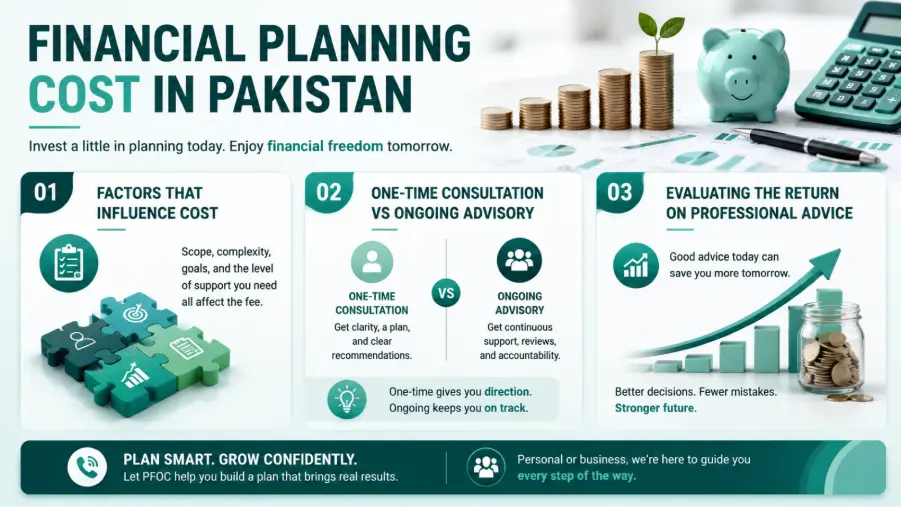
Financial planning cost in Pakistan depends on what you need. A one-time personal review costs less than ongoing advisory. Business planning is priced by size and complexity. Most clients find the return in better decisions and fewer costly mistakes exceeds the fee many times over.
Income alone doesn’t create security. Without a budget, an emergency fund, a debt plan, and a savings strategy, higher income just means higher spending. Personal financial planning puts structure around your income, so it builds wealth instead of just covering costs.
This is almost always a working capital timing issue. Your customers may pay 30 to 60 days after the invoice, but your staff and suppliers need payment sooner. Cash flow planning for businesses maps this gap and builds cash reserves to cover it.
A business financial roadmap is a written financial plan that links your business goals to revenue targets, expense budgets, cash flow forecasts, and investment decisions. It gives you and your team a clear picture of where the business is going and what it needs to get there.
DIY planning works for simple situations with clear goals. When things get more complex, such as business ownership, investment management, tax planning, or retirement, professional help prevents costly errors. The real question isn’t whether you can do it yourself. It’s whether the cost of mistakes exceeds the cost of good advice.
Conclusion: Your Next Step Depends on Where You Are
Financial planning means different things to different people. The right starting point depends on your situation.
If you’re a salaried professional who earns well but can’t seem to save, the issue is usually structure, not income. You need a budget, an emergency fund, and a clear first investment step. A personal financial planning Pakistan review gives you that in one session.
If you’re a family planning ahead for school fees, a home, or long-term security, you need goal-based planning with real timelines and dedicated savings. Starting early makes it manageable. Waiting makes it hard.
PFOC works with individuals and businesses across all these situations. We build practical, specific financial plans based on your real numbers and actual goals. If you’re ready to take control, contact PFOC today for a personalized financial planning consultation. Your plan starts with one conversation.