
- Home
- About Us
- Services
- Our Team
- Dubai
- Blog
- Contact Us
 Business Development Services
 Tax planning Services
 Accounting Services Pakistan
 Financial Consultancy Services
 Statutory Compliance Services
 Investment Consulting Services
 FBR POS Integration & Invoicing
 Call Centre Compliance Services
 Compliance for Software Houses
 Legal Consultancy Services
 Managed IT Support Services
 Event Management Services
 Performance Marketing Services
 Digital Marketing Services
Bookkeeping Services in Pakistan: Daily, Weekly & Monthly Bookkeeping + Reconciliation Packages
Request a Free Quote
Introduction
Your business is only as strong as your records. In Karachi, Lahore, and Islamabad, most business owners know this well.
Tax season often brings trouble. You search for old receipts. You rush to fix bank statements before the FBR deadline.
2026 should be different. You might run a small startup. You might run a large mill in Faisalabad. Moving from paper ledgers to digital bookkeeping isn’t about looking modern. It’s about peace of mind when tax notices arrive. It’s the only way to see where your money goes. It helps you keep your business stable.
What Are Bookkeeping Services?
Think of bookkeeping as a health monitor for your business. In Pakistan, cash and digital payments often mix. Professional financial consultancy services bridge this gap. They record every rupee in a clear way.
This includes large vendor payments through banks. It also covers small petty cash for office supplies.
For an SME in Pakistan, this means:
Recording Sales: We track every invoice. This includes local ‘Parchi’ receipts and digital receipts.
Expense Sorting: We document your bills. Your electricity bills, rent, and staff chai money all get recorded. This helps reduce your income tax.
Payroll: We track salaries. We keep you compliant with local labor rules.
When you hire certified bookkeepers, you get more than data entry. You get an organized financial history. This makes you ‘bankable’ and ‘audit ready.’
How Is Bookkeeping Different from Accounting and Tax Filing?
Many people think these three are the same. In Pakistan, mixing them up can lead to surprise notices from the FBR.
| Feature | Bookkeeping | Accounting | Tax Filing |
|---|---|---|---|
| Main Goal | Recording daily deals | Reading and summing up data | Staying compliant with FBR |
| How Often | Daily or weekly | Monthly, quarterly, or yearly | Every two months (Sales Tax) and yearly (Income Tax) |
| What You Get | Updated ledgers and trial balance | Financial statements (P&L, Balance Sheet) | Income tax returns and wealth statements |
| Pakistan Context | Capturing Withholding Tax (WHT) at source | Looking at 115(4) vs 153 tax effects | Filing Annexure C for Sales Tax |
Understanding these differences helps you hire the right talent at the right time. You don’t need an expensive CA to record daily petty cash. But you do need both skills when preparing for a bank loan or equity round.
Why Do Businesses in Pakistan Outsource Bookkeeping?
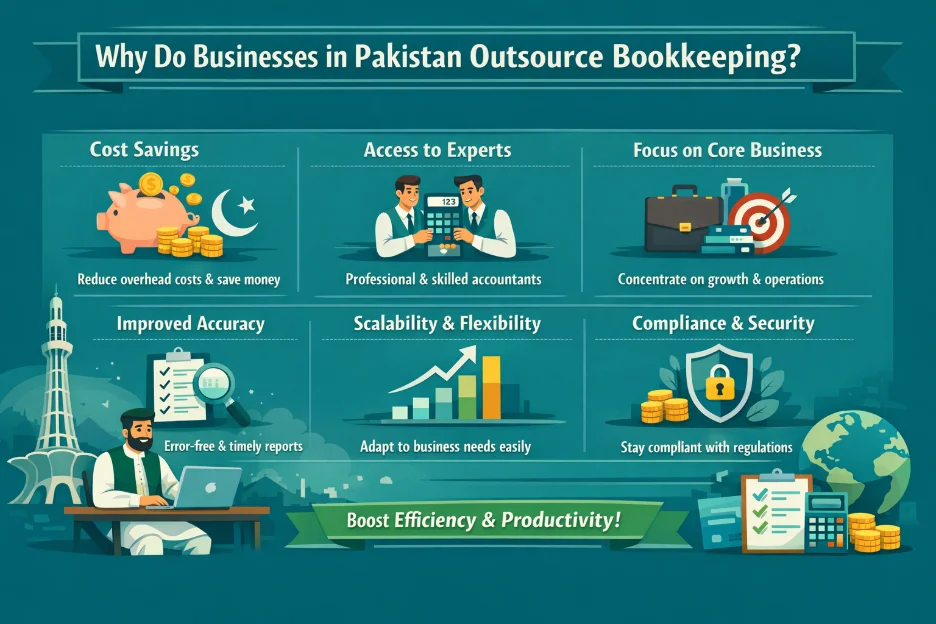
In 2026, outsourcing has become the standard choice. Finding good people is hard. Hiring them costs more.
Cost Savings: A full-time senior accountant in Karachi costs PKR 100,000 per month. Using outsourced accounting services gives you expert work for much less. It’s a simple way to cut costs without losing quality.
FBR Compliance: New Point of Sale (POS) rules are now in place. Strict tax compliance requirements apply. Manual errors can result in heavy fines. Outsourced bookkeeping firms stay updated with the latest FBR news.
Focus on Growth: A startup founder should focus on product-market fit. Not on whether last month’s fuel receipts were matched.
Access to Technology: Most virtual bookkeeping services include premium software. This includes Xero or QuickBooks as part of their package. This saves you from high fees.
Daily, Weekly & Monthly Bookkeeping Services Explained
A good bookkeeping service isn’t one-size-fits-all. It’s a cycle. It watches your financial health in real time.
What Are Daily Bookkeeping Services?
You run a high-volume retail shop or e-commerce business. You can’t let paperwork pile up. Daily bookkeeping is the only way to stay on top.
Your bookkeeper clears yesterday’s sales every morning. Money comes from Daraz, Shopify, or your counter’s POS. They match everything early. You always know your real balance before the next day starts.
Recording Sales: Match cash-on-delivery (COD) receipts with courier reports.
Expense Sorting: Use mobile apps to scan receipts. This ensures no withholding tax chance is missed.
Cash Flow Watch: Keep track of your available-to-spend balance.
What Are Weekly Bookkeeping Services?
Weekly bookkeeping works well for most service-based SMEs.
Bills to Pay: Review which vendors need payment. In Pakistan, this means checking you’re not paying ‘non-filers’ without the required tax cut.
Money You’re Owed: Watch your unpaid invoices. You don’t have to chase clients. For freelancers, this means tracking USD payments. It means confirming you get the correct rate when money hits your account.
Payroll Check: If you have weekly workers, this ensures attendance and payment logs match up.
What Are Monthly Bookkeeping Services?
This is where the heavy lifting happens. Monthly bookkeeping ends with the ‘Month-End Close.
Adjusting Entries: We handle asset wear-down. We record unpaid bills. We track prepayments.
Financial Reports: We pull together your Profit & Loss statements. You can see your actual take-home. This accounts for ‘hidden costs’ that eat into margins. Bank fees and local taxes are included.
Check Rules: Everything gets organized before tax planning deadlines. Sales tax is due on the 15th of every month. It’s about being prepared early. No last-minute panic.
What Are Reconciliation Packages?
Your ledger shows 1 million PKR. Your bank shows 800,000 PKR. You have a problem. This is where bookkeeping reconciliation helps.
A standard package includes:
Bank Matching: We match your books with bank statements. This includes statements from Meezan, HBL, or Alfalah. We look for bank charges, interest, or withholding tax on cash withdrawals you might have missed.
Credit Card Matching: Vital for startups running Facebook or Google Ads. These involve currency changes and international fees.
Vendor Matching: We make sure what your supplier says you owe matches what you recorded. This prevents overpayments. It builds trust.
Tax Matching: The most critical part. We match your recorded sales with the FBR’s Annexe-C data. This ensures no gaps trigger an audit.
How Much Do Bookkeeping Services Cost in Pakistan?
The cost varies based on how many transactions you have. In 2026, the market has moved toward fixed-fee models rather than hourly billing.
| Package Tier | Best For | Monthly Cost (PKR) | Key Features |
|---|---|---|---|
| Starter | Freelancers / Small Shops | 15,000 - 25,000 | Monthly matching, Cost tracking, Basic P&L |
| Growth | Startups / E-commerce | 35,000 - 60,000 | Weekly bookkeeping, Multi-channel matching, and payroll |
| Enterprise | Large SMEs / Makers | 80,000+ | Daily bookkeeping, Stock, Tax Filing, Audit prep |
When looking for affordable financial consultancy services, remember this. The cheapest option might cost you more in FBR fines later. Look for value, not just the lowest price.
Bookkeeping Services for Different Business Types
SMEs
For SMEs in Pakistan, the focus is often on stock and debt recovery. SMEs struggle with ‘dead stock.’ This isn’t shown in their cash-based books. A professional service helps shift them to better accounting.
Startups
Bookkeeping for startups requires a ‘Burn Rate’ focus. Investors want to see a clean ‘Runway’ report. Startup financial services help manage multi-currency transactions. Startups often use international tools. This includes AWS, Slack, and LinkedIn Ads. The bookkeeper must handle multi-currency matching well. They must understand the ‘Foreign Money’ tax laws.
E-commerce
The most complex of all. E-commerce bookkeeping involves matching Daraz payouts, Shopify sales, and Facebook ad spend. You must account for ‘Return to Origin’ (RTO) shipments. Platform fees are often cut before cash hits your bank.
Freelancers
Bookkeeping for freelancers revolves around the 1% or 0.25% export tax rules. Accounting services for oversthe eas Pakistanis help keep clean records of FIRC (Foreign Inward Money Certificate) required for tax breaks.
Case Study: Streamlining an E-commerce Brand in Karachi
A local clothing brand sold on Daraz and Shopify. They struggled with a 15% gap between ‘expected profits’ and actual bank balance.
They were recording total sales as income. They completely ignored the 18% Daraz fee. They also ignored the high Return to Origin (RTO) rates typical in Pakistan’s COD market.
PFOC stepped in. We separated gross revenue from net payouts. We linked their Shopify store with cloud software. Within three months, they found three non-profitable product lines. They improved their cash flow by 30%.
Client Testimonial
“I didn’t realize how much those ‘hidden’ Daraz fees were eating us alive until PFOC cleaned up our records. They found the leaks in our returns. They stopped the guesswork. Finally, our bank balance matched our sales.”
— Amna S., Creative Director
What Are Online & Cloud-Based Bookkeeping Services?
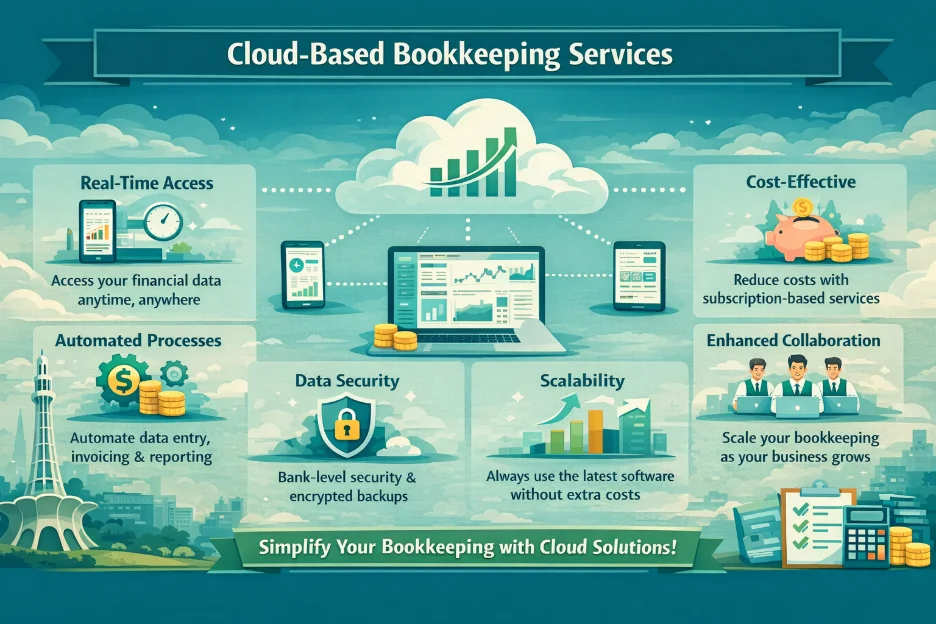
The era of ‘Munshi’ style physical books is over. Online bookkeeping uses platforms like Xero, QuickBooks Online, and Zoho Books. Locally, apps like Udhaar Book have gained use for simpler needs.
The advantage is simple. You can see your financial health on your phone. Even while stuck in traffic on Shahrah-e-Faisal. No more waiting for ‘the accountant’ to come to the office. No more waiting to learn how much cash is in the bank.
How Does Bookkeeping Compliance Work in Pakistan?
In 2026, bookkeeping compliance means ‘FBR Readiness.’ The FBR’s digital push means your bank deals are visible to tax authorities.
Section 153 Compliance: Make sure you withhold the correct tax from payments.
Sales Tax Matching: Match your purchase invoices (Annexe-A) with your sales (Annexe-C).
Audit Trail: Professional statutory compliance services keep a ‘Digital Audit Trail.’ Every entry is backed by a digital copy of a receipt. This makes a tax audit easy rather than stressful.
What Are Common Bookkeeping Mistakes?
Mixing Personal and Business Costs: Using the company bank account for a family dinner creates problems. Bookkeeping has become difficult. It raises red flags during audits.
Ignoring Small Cash: Small costs add up. If they aren’t recorded, your profit looks high. You pay more tax than you should.
Waiting Too Long: Waiting until June 30th to do a year’s worth of matching is bad. Memories fade. Receipts get lost.
‘My Tax Filer Handles Everything’: A tax filer reports what you tell them. If your data is wrong, your filing is wrong. You need proper bookkeeping and tax filing. This ensures that the data going into the tax return is right.
How Do You Choose the Best Bookkeeping Services?
Choosing the best bookkeeping services isn’t just about looking for a CA logo. You should check:
Industry Know-How: Do they understand your sector? Textile exports vs. retail have different needs.
Tech Skills: Are they pushing for online bookkeeping? Or are they still asking you to print and mail documents?
Talk: A good bookkeeper shouldn’t just send reports. They should explain what the numbers mean for your business.
Growth Ready: Can they handle your business as it grows? From 10 deals monthly to 1,000?
How PFOC Can Help
At PFOC, we don’t just ‘do your books.’ We partner with you. We provide a bookkeeping package that grows with your business.
Our team understands the local grind. From dealing with the PRA in Punjab to handling the quirks of the SRB in Sindh. We keep you compliant without the regional headaches.
We offer specialized business development and financial services that include:
- Real-time daily bookkeeping for retail and e-commerce
- End-to-end tax matching to keep you in the FBR’s ‘Good Books’
- Seamless move to cloud-based bookkeeping platforms
Conclusion
Business success in Pakistan today isn’t just about working hard. It’s about being smart with your data.
Hiring a professional bookkeeper gets you out of the daily paperwork grind. It gives you the actual numbers you need to grow.
Don’t wait for a stressful tax notice. Don’t wait for a sudden cash crunch to start fixing things. Getting your books in order now gives you peace of mind. You’ll know exactly where every rupee goes.
Ready to get started? Contact PFOC today for a free consultation.
FAQs:
You’re running a busy retail outlet. Daily bookkeeping costs between 25,000 PKR and 45,000 PKR per month. This covers keeping your sales and costs up to date every 24 hours.
Every seven days, someone checks your bills. They sort what you’ve spent since the last check-in. Bills due get tracked right away instead of piling up. Money moving in and out is reviewed in a quick look each week. This way, nothing hides too long before it’s noticed.
Every month, our team checks everything. Mistakes never reach the FBR. Because numbers are reviewed monthly, what you sell matches what gets reported. Mistakes slip less when records line up each time. With regular tracking, gaps between actual sales and tax data stay closed.
Instead of hiring a senior accountant, firms get skilled support at a lower cost. Picking a provider opens doors to modern tools. Most small teams can’t afford these tools. Because tax rules change often, these services adjust quickly. This makes it easier to stay aligned with FBR updates. Help arrives quietly behind the scenes while numbers remain right.
Find a team that understands your industry. Make sure they use cloud-based tools. You can check your profits on your phone while stuck in traffic.
We need your bank statements, purchase bills, and sales invoices. We’ll also request tax papers. This keeps bookkeeping compliant. These are shared via a secure digital folder.
A reconciliation package involves a deep dive. Your bank deals, ledgers, and tax papers get reviewed. This process ensures every rupee of withholding tax is counted. This is exactly what the FBR looks for.
Yes. While they are different tasks, bookkeeping and tax filing are two sides of the same coin. Clean data from a bookkeeping service makes the actual filing process right. It makes it simple for your tax adviser.
Affordable bookkeeping starts around 15,000 PKR for freelancers. For a growing SME, the cost often ranges between 30,000 and 55,000 PKR. This depends on the volume and complexity of your work.
Yes. Any solid bookkeeping service will provide a Profit & Loss statement. They’ll provide a Balance Sheet every month. These reports are key for SME bookkeeping. They help determine whether you’re making a profit.
Cloud-based bookkeeping cuts out human errors. These errors come from manual data entry. It makes online bookkeeping fast. It links directly to your bank feeds. It enables real-time work.
In Pakistan, bookkeeping is about daily ‘inputs.’ This includes recording sales. Accounting is the ‘output.’ It’s the high-level analysis. You need both bookkeeping and accounting to work together for a healthy business.
Yes. Bookkeeping for freelancers is a lifesaver. This is especially true for those getting USD payments. We help you track your FIRCs. This keeps your tax-free status. Bookkeeping rates are affordable. They start at 10,000-15,000 PKR.
A bookkeeping compliance checklist should include bank matching, tax verification, and sales tax form matching. It should also cover your fixed asset wear-down. This ensures you’re always ready for an FBR check.
Virtual bookkeeping works through secure digital portals. You upload your receipts and bank statements. We handle the rest remotely. It’s an efficient way to get certified bookkeeping without the overhead.